To create an app in 2026, start with a specific problem, check that users want it solved, then build a first version around one useful end-to-end journey. Choose your tools afterwards: web, mobile, no-code or custom development should serve your project, not define it.
This guide is for business owners, entrepreneurs and anyone with an app idea in the Paris region. You do not need to know how to code to make the first decisions: you need to understand your future users and what your product should do for them.
1. How do you know whether your app idea solves a real problem?
Before requesting a quote, describe your idea in one sentence: ‘I help [a specific audience] to [complete a task] without [the current difficulty].’ A management app for every business is too vague. A tool that helps a rental manager track bookings and vehicle inspections is a concrete starting point.
- Meet potential users and ask how they work today, rather than whether they like your idea.
- Identify what costs them time or money, or causes mistakes.
- Look at the alternatives: spreadsheets, email, existing software or manual processes.
- Seek a concrete commitment: testing a prototype, joining a pilot or discussing a paid offer.
An enthusiastic interview does not prove someone will use or buy your app. Record objections and constraints: who decides, who pays, what data is available and which tools must stay connected? For an internal app, the benefit may be operational rather than commercial.
2. Should you build a web app or a mobile app?
A web app opens in a browser through a link. A native mobile app is designed for iOS or Android and can be distributed through their stores. Start with essential use cases: desktop work, camera access, offline operation and notifications do not all lead to the same choice.
| Main need | Starting point to explore | What to check |
|---|---|---|
| CRM, customer portal, bookings or SaaS | Mobile-friendly web app | Small-screen usability and business integrations |
| Intensive phone use and device features | Native or cross-platform mobile app | Feature access, iOS/Android testing and distribution |
| Browser access with optional installation | Progressive web app (PWA) | Actual compatibility across browsers and devices |
| Offline work | Architecture designed for offline use | Local storage, synchronisation and data conflicts |
A well-designed web app can be a practical way to test a service without immediately launching two mobile apps. This is not a universal rule: if offline access or a device feature is central to the value, test that constraint before choosing. A web prototype does not automatically become a native app.
3. Which features belong in your first version?
An MVP, or minimum viable product, is the smallest version that lets a user complete a useful task and lets you learn something measurable. It is neither a throwaway demo nor a product stripped of testing and security.
Write a success condition for each feature: ‘After validation, the booking appears in the management area and the user receives a confirmation.’ These criteria make conversations with the team easier and help you assess delivery beyond how the screens look.
4. Can you create an app without coding, using AI or no-code?
Yes, these tools can help design and build an app without writing every line of code yourself. Platforms such as Lovable let you describe the outcome you want. But generating an interface does not guarantee a reliable product: business rules, data access, payments and errors still need verification.
| Approach | When to consider it | What to watch |
|---|---|---|
| Build it yourself | Explore the idea and test a first journey | Available time, learning and control over data |
| Work with a freelancer | Defined scope and a specialist contact | Availability, documentation and handover terms |
| Work with an agency | Support from design through ongoing operations | Team, test coverage, security and maintenance in the contract |
The right choice depends on your time, complexity and risk. Ask who will control the code, hosting accounts, domain and data. Check how another team could take over. Freelancers and agencies vary in skill: evaluate concrete commitments rather than the label.
5. What budget should you plan to create an app?
There is no single price for an app. A quote should specify the journey to deliver, screens, integrations, data migration and acceptance criteria. Compare equivalent scopes: a prototype, a usable MVP and a complete product involve different work.
- Design: scoping, user journeys and mockups.
- Development: interface, data, business rules and connections to your tools.
- Launch: testing, go-live and any mobile distribution.
- Operations: hosting, email, payments and third-party services depending on usage.
- Support: fixes, backups, monitoring and improvements.
- Your time: approving screens, preparing content and supporting early users.
Also plan how people will discover your app. Without users, a well-built app does not validate a market. Platform prices change: check them directly and distinguish illustrative estimates from a quote for your project.
Explore cost categories and return on investment in our dedicated article. Its scenarios do not replace an estimate based on your scope.
Read the Budget & ROI guide6. What should you check before your app goes live?
Test the main journey and what happens when things go wrong: forgotten passwords, rejected bookings, interrupted connections, payment errors or accounts without permissions. Test on your users' devices with test data before processing their real data.
- Access: each person sees only authorised data and actions.
- Personal data: collect only what is necessary; define purposes, lawful basis and retention periods.
- Information: explain data processing and how users can exercise their rights.
- Providers: identify where data is hosted and who processes it.
- Backups: plan restoration, not just making a copy.
- Reliability: check forms, confirmations, error states and mobile journeys.
GDPR compliance is not just adding a cookie banner. Obligations depend on the processing and its risks; sensitive-data projects deserve a specific assessment. CNIL resources on data protection by design and its security guide are useful starting points, not a substitute for tailored advice.
7. How do you launch and improve your app?
Launch with a group of users you can listen to. Define a measure tied to your goal: completed booking requests, error-free case handling or returning users. Visits alone do not tell you whether the product is useful.
- ObserveFind where users drop out and listen to their difficulties.
- FixResolve blockers and errors before adding features.
- MeasureCompare outcomes with the original problem: time saved, conversion or service quality.
- PrioritiseImprove the product based on observed usage and your available budget.
8. Kreapp apps that make your project more concrete
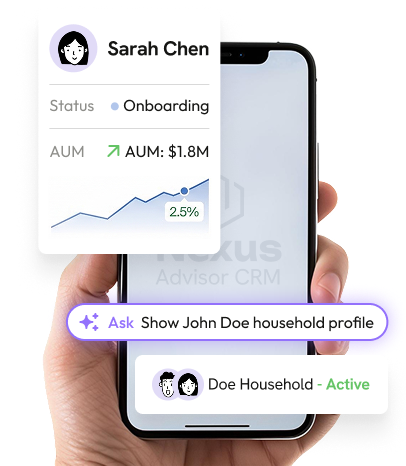
Our case studies illustrate different needs: Nexus organises customer relationships for wealth advisors, Thiia combines prospecting with relationship CRM, and Room2Road supports van bookings. They can help you explain your needs without assuming your app should reproduce all their features.
9. Frequently asked questions from entrepreneurs
Can I create an app for free?
You can explore an idea with some free tools, within their limits. A production service requires you to examine hosting, domain, third-party service and maintenance costs. Free to prototype does not mean free to operate.
How long does it take to create an app?
Timing depends on scope, integrations and the availability of people approving the work. Kreapp's stated objective is a usable first version in three months, to be confirmed after scoping. A timeline without a defined scope is not a guarantee.
How do I protect my idea and stay in control?
Formalise confidentiality if needed, and define deliverable rights, account access and handover terms in the contract. Protecting an idea, a brand and software raises different questions: seek tailored legal advice rather than relying only on a non-disclosure agreement.
How do I start in Paris or Île-de-France?
Prepare your target audience, the problem, the essential journey and your constraints. Kreapp works with business owners and people with app ideas in Paris and Île-de-France, with an initial meeting in person or by video to scope the project.
Want to create an app but unsure where to start? Discover our support in Paris, from clarifying your needs to launch and ongoing improvements.
App development in Paris: discuss your idea